The Stockholm Archipelago with Kids: Which Boat and How Long
The short answer
Sheltered water, short crossings and toilets on board make this an easy day with children. The one trap is the RIB speedboat, which does not take under-12s.
Is it worth it with children? Yes, with one caveat
The archipelago is unusually good with children. The water is sheltered, the crossings are short, the boats have indoor seating and toilets, and there is always something moving to look at. Most families have a better time here than at any museum in the city.
The caveat is the RIB speedboat, which sets a minimum age of 12 and excludes pregnant travellers and anyone with back problems. It is the one trip that will turn a family away at the quay, and it is worth knowing before you book rather than after.
Which boat suits which age
| Age | Best option | Why |
|---|---|---|
| Under 3 | A 1.5-hour guided cruise | Short, indoor seating, a stroller allowed on the main deck |
| 3 to 7 | A 1.5 to 2 hour cruise | Under-sevens travel free with a paying adult on one listing |
| 8 to 11 | A 2.5-hour cruise or the lunch cruise | Long enough to feel like a voyage, with food to break it up |
| 12 and over | The RIB, or the kayak half day | The age limit lifts and the fun goes up sharply |
| Teenagers | The kayak half day | Four hours of doing rather than watching, with a swim stop |
What makes it work for children
- Sheltered water. The inner archipelago rarely gets rough, so seasickness is uncommon.
- Indoor and outdoor space. Children can move between a warm saloon and an open deck.
- Toilets on board. Standard on the larger boats, which removes the usual anxiety.
- Food to buy. Cafeterias sell sandwiches, buns and drinks throughout.
- Constant traffic. Other boats, ferries and sailing yachts keep the window interesting.
How long is too long
Ninety minutes is the safe first trip with small children. Two to three hours works well from about five upwards, especially with food involved. The full-day options — kayaking and sailing — are eight or nine hours, and they are genuinely long for anyone under about twelve.
The Vaxholm excursion is an interesting middle case. It runs four and a half hours, but two of those are ferry time and ninety minutes are spent walking around a town, which breaks the day up better than a straight cruise of the same length.
Strollers, buggies and what to leave behind
Two operators explicitly welcome strollers, with a preference for a foldable one kept on the main deck rather than in the saloon. Gangways are steep and often wet, so a carrier is easier than a buggy if your child is small enough for one. Large bags are prohibited on the RIB entirely.
What to bring for a family day
- An extra warm layer each, more than you think you need on open water.
- Something to eat that does not depend on the on-board cafeteria being open.
- A card for buying snacks, since Swedish boats are cashless.
- Sunscreen, because glare off the water catches people out in a way city sun does not.
One operator prohibits outside food and drink altogether and sells its own instead, so check that listing before packing a picnic. Where and what to eat covers what is included on each trip.
Costs for a family
A family of four on a 1.5-hour guided cruise is the cheapest way into the archipelago, at around $29 a head and free for under-sevens on one listing. The lunch cruise at roughly $58 includes a main course each, which is competitive against feeding four people in the city afterwards. Kayaking at about $145 per person is a different order of spend, and worth it only if your children are old enough to paddle their own boat or share a double.
A day that works, hour by hour
- 09:30 — walk to Strandvagen and find the berth. The numbers are painted on the quay.
- 09:45 — board early and claim seats on the open deck, which is where children want to be.
- 10:00 — departure. The first twenty minutes are city shoreline, then the islands start.
- 10:40 — buy something from the cafeteria. It breaks the trip up at exactly the right point.
- 11:30 — back alongside, with the whole afternoon still available.
That shape works from about age three upwards. For older children, swap the cruise for the kayak half day and expect to be finished by mid-afternoon.
What children actually notice
Not the history. What holds them is the traffic: other ferries, sailing yachts, the wake, the gulls following the stern, and the moment the boat turns and the deck tilts. Guides who are good with families lean into that rather than the dates.
The other reliable draw is the red boathouses, because they look exactly like a drawing of a house. Children spot them long before adults do, and counting them keeps a five-year-old busy for an hour of open water.
The one thing worth booking ahead
Small-group trips cap at eight to ten people and genuinely fill in July. The large guided cruises rarely sell out, so if your plans are loose, they are the flexible option. If your children are old enough for the kayak day, book that one early — eight places across a whole summer week is not many.
Managing the practical worries
Seasickness is rare on the inner routes, and sitting on the open deck watching the horizon handles most of it. Cold is the more common problem, and it is solved with a windproof layer. Boredom is solved by the deck; almost no child stays seated once the boat is moving.
For access, most listings state plainly that their boat is not wheelchair accessible, and the same steep gangways affect buggies. Visiting the Stockholm Archipelago covers accessibility per boat.
A workable family day
Take a morning cruise from Strandvagen, eat lunch back in Ostermalm, and let the afternoon go slowly. Or take the lunch cruise and combine the two. If your children are twelve or over and you want the day they will actually remember, book the kayak half day instead and accept that you will all sleep well. Tours by season covers when each option runs.
Book it
For a family, the short guided cruise from Strandvagen is the dependable choice — all ages, indoor seating, and under-sevens free on one listing.
Compare Stockholm Archipelago tours
Tours that work with children
Short, sheltered and indoors when it needs to be. No minimum age on any of these.
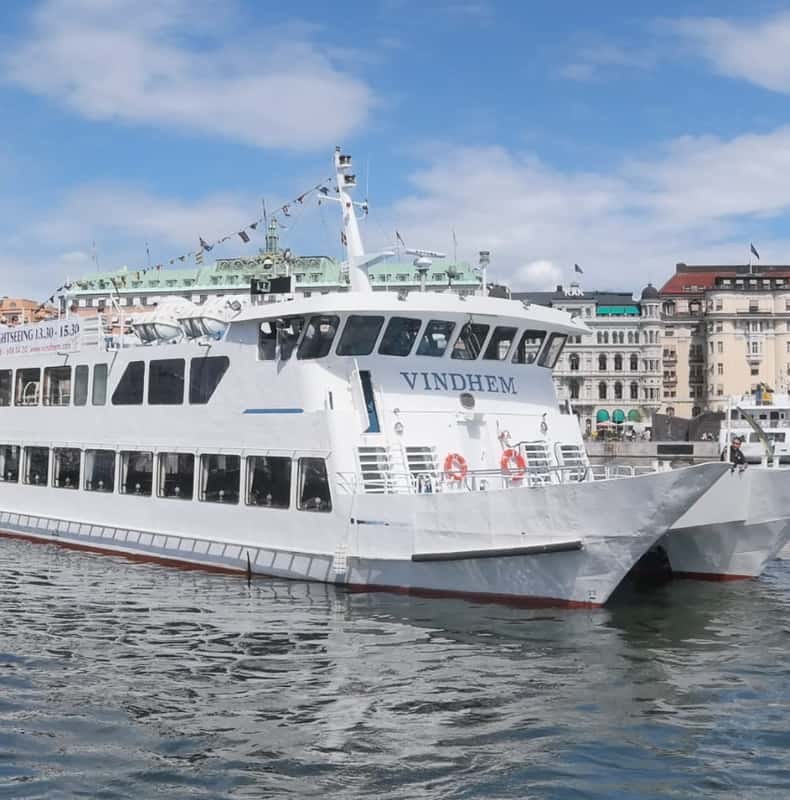
Archipelago Guided Tour on Historic Ship with Fika
Two hours, an indoor lounge, a toilet on board and a pastry that keeps small people busy.
From $29 per person
Check Availability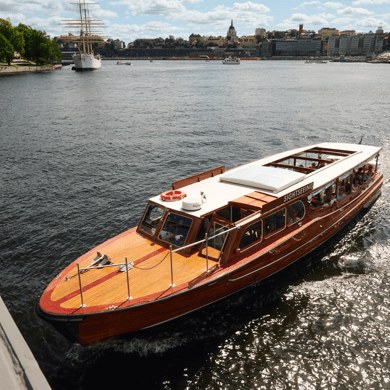
Guided Stockholm Archipelago Tour by Classic Wooden Boat
105 minutes with comfortable seating and a toilet — short enough for a restless age.
From $39 per person
Check Availability
Guided Stockholm Archipelago Islands Tour
Shortest trip in the lineup at 90 minutes, and the easiest to abandon if the mood turns.
From $33 per person
Check Availability