Facts About the Stockholm Archipelago That Will Surprise You
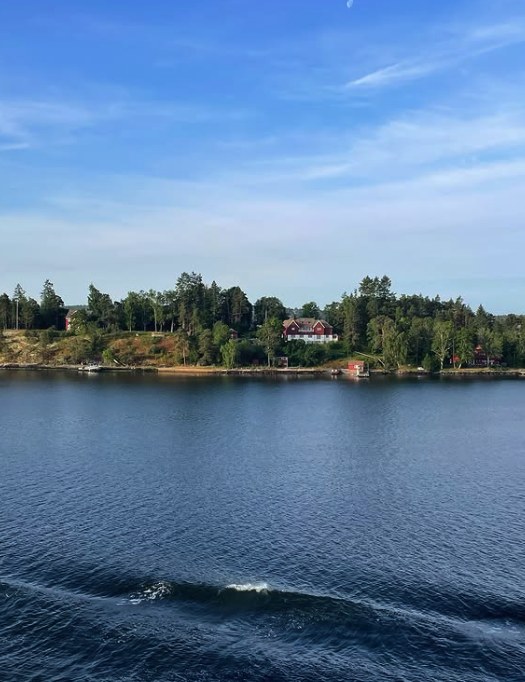
The short answer
It has about 24,000 islands, or 30,000 if you count bare rock. Only a third of its area is land, and the whole thing is still rising out of the sea at three millimetres a year.
Nobody agrees how many islands there are
The figure you see depends entirely on what the counter decided to count. Wikipedia puts it at slightly over 24,000 islands, islets and skerries. Visit Sweden says 30,000 islands, skerries and rocks. The gap is not an error — it is roughly six thousand bare rocks.
Both numbers are honest and both get quoted as fact. It is a good illustration of how a landscape made mostly of stone resists being counted at all.
It is still coming out of the sea
The archipelago is rising by about three millimetres a year. The ice sheet that sat here during the last glaciation pressed the crust down, and it has been springing back ever since. New skerries appear, shallow channels close, and harbours that worked for medieval boats no longer do.
Over a human lifetime that is around a quarter of a metre. Over the time people have lived here, it has redrawn the map.
In 1719 there were fewer than 3,000 people in the whole archipelago
The recorded population was about 2,900, mostly fishermen. Today there are roughly 10,000 permanent residences and about 50,000 holiday homes. The archipelago went from a working fishing economy to a leisure landscape, and the second is far more populous than the first ever was.
The land is a fraction of the area
The archipelago covers about 1,700 square kilometres, but only around 530 of that is land. Just under a third. When people call it a landscape of water with rock in it rather than land with sea around it, the arithmetic backs them up.
There are only three deep-water ways in
For all those thousands of islands, large vessels have three entrances: Landsort, Sandhamn and Soderarm. Everything else is too shallow, too narrow or too strewn with rock. That is why Sandhamn became the sailing capital and why pilot stations like Dalaro mattered so much.
It stretches further than most visitors realise
The archipelago runs 60 to 80 kilometres east of the city, depending on where you draw the outer edge. North to south it reaches from Oja, below Nynashamn, up to Vaddo above Norrtalje. A two-hour cruise covers a very small corner of it, which is worth knowing before you assume you have seen the place.
The nearest islands are twenty-five minutes away
Fjaderholmarna is closer to central Stockholm than many of the city's own suburbs. You can finish breakfast in Gamla Stan and be sitting on archipelago granite before mid-morning. Few capital cities have genuine wilderness that close to the centre.
One of the boats has been working since 1906
M/S Ostana I, which runs the lunch cruise from Strandvagen berth 15, was built in 1906 and is still in scheduled service. The classic ships are not replicas or museum pieces — they are working vessels that happen to be very old. S/S Stockholm and M/S Evert Taube run the same stretch of water.
The Baltic here is barely salty
So much fresh water drains into the Baltic, and its connection to the North Sea is so narrow, that the archipelago's water is brackish rather than properly saline. It freezes more readily than sea water and it tastes wrong if you swallow it. It is also why swimming here feels closer to a lake than an ocean.
In summer the light barely leaves
Stockholm sits far enough north that midsummer nights never get properly dark. The sun sets close to ten and the sky holds a blue glow until it returns. On an evening cruise in June you can still read the shoreline at eleven, which changes what an evening departure means.
Anyone may camp on it, within limits
Sweden's right of public access, allemansratten, lets you walk, swim, pick berries and pitch a tent for a night on uncultivated land, including most archipelago rock. You keep clear of homes and gardens, you leave no trace, and you do not light fires on bare granite because it cracks. It is a genuinely unusual freedom and it is why kayakers can land almost anywhere.
The steamboat era built the summer house
Before scheduled steamers, the archipelago was a working landscape that city people did not visit. Regular boats changed that within a generation, and the villa culture that produced those 50,000 holiday homes followed the timetables out from the city. The classic ships still running today are the direct descendants of that traffic.
The water freezes, and that used to matter more
Because the Baltic here is brackish rather than fully saline, it freezes more readily than open sea. Ice historically cut outer islands off for months, and ice-breaking is still part of keeping the winter routes open. It is also why the kayak and sailing seasons are firmly summer, while the big guided cruises run year-round.
The numbers, side by side
| Fact | Figure |
|---|---|
| Islands, islets and skerries | About 24,000 (30,000 counting bare rock) |
| Total area | About 1,700 km² |
| Land area | About 530 km² |
| Reach east of Stockholm | 60-80 km |
| Permanent residences | About 10,000 |
| Holiday homes | About 50,000 |
| Population in 1719 | About 2,900 |
| Annual land rise | About 3 mm |
| Deep-water entrances | Three: Landsort, Sandhamn, Soderarm |
The archipelago has a shipping problem it solved with rocks
Because there are only three deep-water entrances, everything large funnels through them, and everything else relies on local knowledge. That is why pilot stations at places like Dalaro mattered so much, and why a pilot's job here was a serious profession rather than a formality.
It also explains a complaint that appears in reviews of one cruise: the route follows the main shipping channel. On this coast, the shipping channel is often the only water deep enough for a large boat to use.
Why the facts change how you book
- If it runs 80 kilometres east, a 90-minute cruise sees the inner edge — fine, but know it.
- If only a third is land, a boat is not the scenic option, it is the only access.
- If the water is brackish and shallow, swimming from a kayak stop is genuinely pleasant.
- If there are 50,000 summer houses, the shoreline you photograph is inhabited, not wild.
See the islands guide for which of these places you can reach, and tours by season for when. Stockholm Archipelago Tours compares every departure, and visiting the Stockholm Archipelago covers the practical day.
Book it
The 1906 ship in these facts still runs the lunch cruise from Strandvagen berth 15, which is the easiest way to see the archipelago and eat properly at the same time.
Compare Stockholm Archipelago tours
Tours that show you the facts
The working classic ships, and the trips with the most guiding per hour.
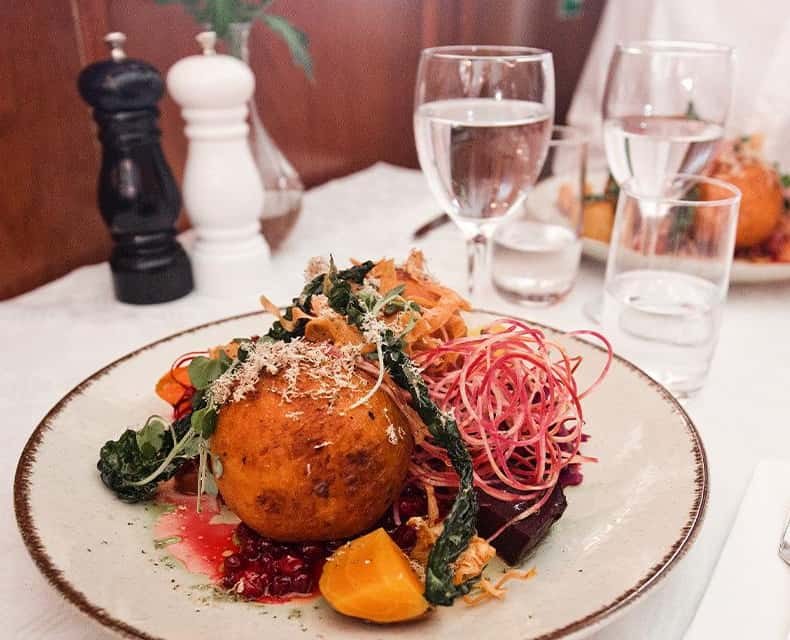
Stockholm Archipelago Cruise with Lunch (Guided)
Sails on M/S Ostana I, built in 1906 and still working the lunch route from berth 15.
From $57 per person
Check Availability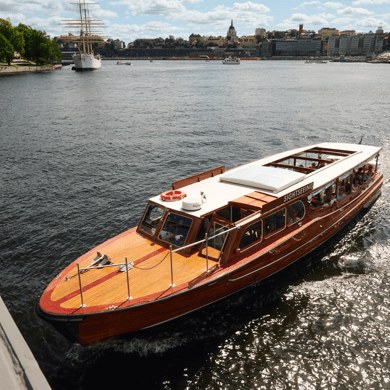
Guided Stockholm Archipelago Tour by Classic Wooden Boat
A classic wooden hull rather than a modern one, with a live guide for 105 minutes.
From $39 per person
Check Availability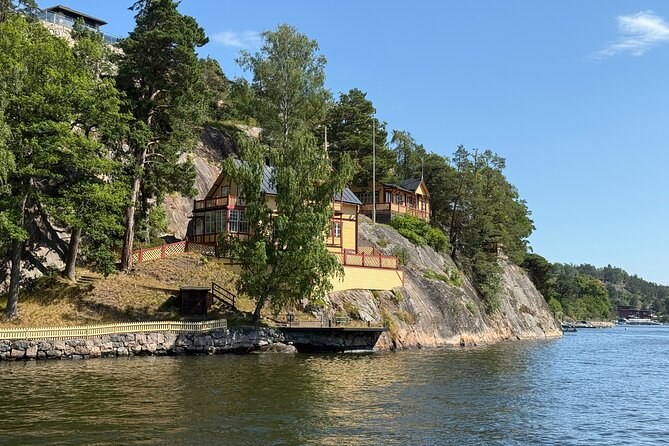
Stockholm Archipelago Tour with Live Guide
Two and a half hours of commentary, which is where most of these facts come from.
From $42 per person
Check Availability