When to Visit the Stockholm Archipelago
The scenery barely changes between May and October. Daylight, water temperature, crowds and how far ahead you must book change enormously. Here is the archipelago month by month, and which one suits the trip you are planning.
In this guide
- When is the best month to visit the Stockholm Archipelago?
- Month by month
- What does the light do between May and August?
- How warm does the water actually get?
- Which months are busiest?
- How far ahead should you book, month by month?
- Is September really better than July?
- What runs in winter?
- Does ice ever stop the boats?
- What to wear, by month
- When is the light best for photographs?
- Which month suits a first visit?
- Frequently asked questions
When is the best month to visit the Stockholm Archipelago?
June if you want light, July if you want everything open and warm, September if you want the same landscape without the crowd. Those three months answer nearly every version of the question.
What changes between them is not the scenery. Granite, pine and red timber look much the same in May and October. What changes is how long the day lasts, how warm the water is, how many people are on the boat, and how far ahead you have to commit.
Month by month
| Month | Daylight | Water | Crowds | What runs | How far ahead to book |
|---|---|---|---|---|---|
| January | Dark by mid-afternoon | Cold, and nobody swims | Empty | Guided cruises, daily | A day or two |
| February | Lengthening, still short | Cold | Empty | Guided cruises, daily | A day or two |
| March | Even days and nights | Cold | Quiet | Guided cruises, daily | A day or two |
| April | Long evenings return | Cold | Quiet | Cruises; the season starts to open | A few days |
| May | Light until late | Warming, not swimmable | Building | Most trips running | A week |
| June | Barely dark at all | Fresh but usable | Busy | Everything | Two to three weeks |
| July | Long, warm evenings | Warm | Busiest of the year | Everything | Three weeks or more |
| August | Shortening noticeably | Warmest of the summer | Busy | Everything | Two to three weeks |
| September | Low, golden light | Still warm from summer | Thinning fast | Cruises; the last kayak days | A week |
| October | Short and soft | Cooling | Quiet | Guided cruises, daily | A few days |
| November | Dark early | Cold | Empty | Guided cruises, daily | A day or two |
| December | Shortest days of the year | Cold | Empty | Guided cruises, daily | A day or two |
Service levels as published by the operators. Booking windows are a planning guide, not a rule — every departure here cancels free up to 24 hours ahead.
What does the light do between May and August?
It stops behaving normally, and it is one of the real reasons to come in summer.
By June the sun sets close to ten and the sky never fully darkens. What that gives a visitor is a second evening: an eight o'clock departure is a daylight cruise, and the water holds a low gold for hours rather than minutes. May and July sit either side of that peak and are nearly as generous.
August is where you notice the turn. The evenings shorten week by week, and by the end of the month a late cruise finishes in something recognisable as dusk.
How warm does the water actually get?
Warmer than the latitude suggests, and later than most visitors plan for.
The Baltic here is brackish and shallow in the inner bands, so it heats slowly through summer and holds that heat into the autumn. The practical consequence is that swimming is better in late August and September than in June, which is the opposite of what a northern-Europe assumption predicts.
This only matters on the trips where you can get in — the kayak and sailing days. Nobody swims from a sightseeing cruise at any point in the year.
Which months are busiest?
July, decisively, followed by the second half of June and the first half of August. This is the Swedish holiday season as well as the international one, so the boats carry cottage owners and day-trippers alongside visitors.
The crowd shows up in two places: the small-group trips sell out, and the popular cruise departures fill their best deck space early. Neither ruins the day. Both are worth planning around by booking ahead and taking a morning departure.
From mid-September the pressure drops away almost overnight, and by October the same boats run half empty.
How far ahead should you book, month by month?
The lead time is set by capacity rather than by demand alone.
- July: three weeks or more for anything capped at eight, nine or ten people. A week is usually enough for the large cruises.
- June and August: two to three weeks for the small-group days, a few days for the cruises.
- May and September: about a week covers everything.
- October to April: a day or two. The cruises run daily and rarely fill.
Is September really better than July?
On most measures, yes. The cruises run the same routes on the same boats. The water is at its warmest after a summer of sun. The forests turn, and the low light is better for photographs than anything high summer offers. The crowds have gone back to work.
From mid-September a 30-day or longer SL travelcard also becomes valid on Waxholmsbolaget at no extra cost, so the public ferry network stops costing anything on top. That concession runs through to April.
What July has that September does not is guaranteed service on the summer-only trips and long, warm evenings. If a kayak day or a sailing day is the point of the trip, take July. If a cruise is the point, September wins on almost every other measure.
What runs in winter?
More than visitors expect. The guided sightseeing cruises keep daily departures through the whole winter, with heated saloons and large windows, and a grey Baltic seen from a warm room is a genuinely good way to spend two hours.
What stands down is everything weather-exposed: both kayak operators and the sailing day are summer businesses. The Vaxholm ferry excursion is seasonal too, though Vaxholm itself remains reachable on the scheduled network all year.
Which boats run in which season, and what to pack for each, is set out in full on Stockholm Archipelago tours by season.
Does ice ever stop the boats?
The inner archipelago freezes in a hard winter, and the scheduled network is built for it — ice-strengthened hulls have worked this water for generations. Sailings can be rerouted or delayed in severe conditions rather than cancelled outright.
For a visitor the practical answer is simpler: the guided cruises publish daily winter departures and sail them. Check the operator's own notice on the day if a cold snap is forecast.
What to wear, by month
One rule covers the whole year: dress for the water, not for the city. Open water runs several degrees colder than the streets, and the wind is constant.
- June to August: a light layer plus a windproof outer, whatever the forecast says. Sunglasses, because the glare off the Baltic is what people forget.
- May and September: a proper jacket and something warm underneath. Flat shoes for wet decks and steep gangways.
- October to April: winter clothing, gloves and a hat. The saloons are heated, but the deck is where the view is.
Technical gear is supplied where it is needed. The RIB hands out overalls, wind jackets and beanies; the kayak and sailing days provide everything but your own clothes.
Book the season you are travelling in
Every departure with what it includes and how much it costs, so a September plan and a July plan are easy to compare.
When is the light best for photographs?
Late September and early October, then June evenings.
Autumn gives you a low sun for most of the useful day, colour in the forests and haze off the water in the mornings. Midsummer gives you hours of gold rather than the twenty minutes a lower latitude allows, which makes an evening departure the strongest booking of the year for photography.
Midday in July is the hardest light of all — high, flat and hard on white boats and pale granite. If photographs are the reason you are going, avoid the noon sailing.
Which month suits a first visit?
June or September, and the choice between them is about what kind of day you want.
June if you want everything available, long evenings and the archipelago at full tilt. Book the small-group trips well ahead.
September if you want the same water with room to breathe, warm swimming and a lower chance of a full boat. The summer-only trips are winding down, so check the dates before you build a day around one.
Either way, take a morning or an evening departure rather than the middle of the day. The water is better and so is the light.
Frequently asked questions
What is the best month to visit the Stockholm Archipelago?
Do Stockholm Archipelago tours run in winter?
When is the water warm enough to swim in the Stockholm Archipelago?
How far in advance should I book an archipelago tour?
Is the Stockholm Archipelago worth visiting in autumn?
Tours for the season you are travelling in
One that runs all year, one that only runs in summer, and one for the shoulder months.
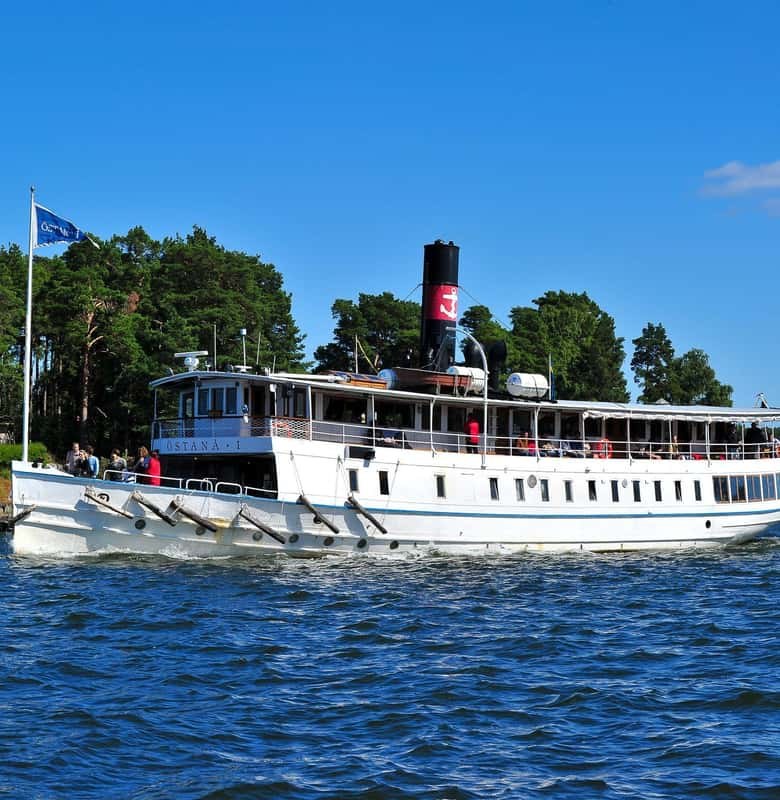
Stockholm Archipelago Sightseeing Cruise with Guide
Runs daily all year, with 1.5, 2.5 and 3-hour options, so it works in February as well as July.
From $29 per person
Check Availability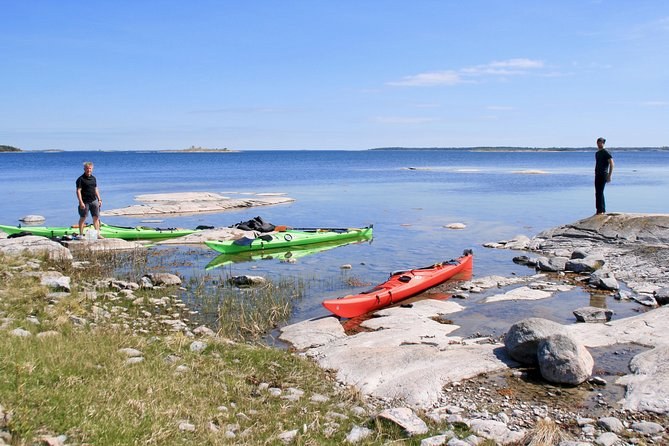
1-Day Small-Group Stockholm Archipelago Kayak Tour
A summer-only day with eight places, transport from the city and lunch on an island beach.
From $155 per person
Check Availability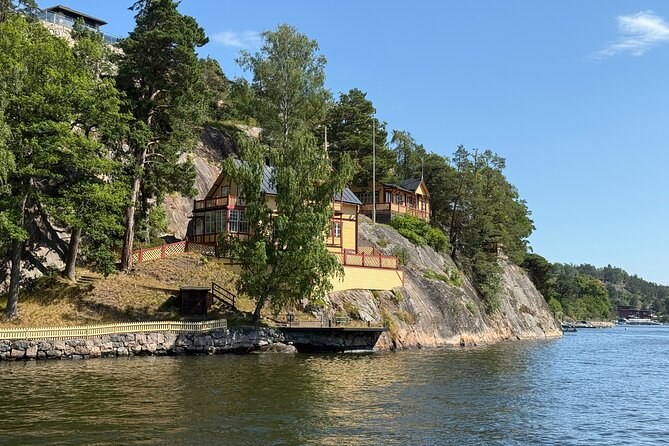
Stockholm Archipelago Tour with Live Guide
Two and a half hours with a restroom, WiFi and indoor space — the shoulder-season choice when the deck is cold.
From $42 per person
Check Availability